The Neural Load: Why Your Brain Tires Before Your Muscles
There is a specific feeling every endurance athlete recognizes: the "brain fog" that sets in during the final stages of a long race. We often attribute this to glycogen depletion or general physical fatigue. However, modern sports science has identified a critical, often-overlooked factor: "Neural Load." Balance is not a passive state; it is an active, high-frequency data-processing task for your brain. If your paddleboard is unstable, your central nervous system is firing thousands of signals per minute to your stabilizer muscles. By the end of an hour, your brain has reached a state of cognitive exhaustion. You aren't just physically tired—you are neurologically tapped out.
Section 1: The Cost of Micro-Corrections
Every time your board wobbles by a fraction of a degree, your vestibular system initiates a reflexive stabilization command. On a "twitchy" racing board, these micro-corrections occur subconsciously, hundreds of times per minute. This uses an enormous amount of metabolic energy. Your brain is essentially running a high-intensity background process. The more unstable the hull, the higher the "processing cost," and the faster your cognitive reserve is depleted.
Section 2: RockerWave’s Neurological Efficiency
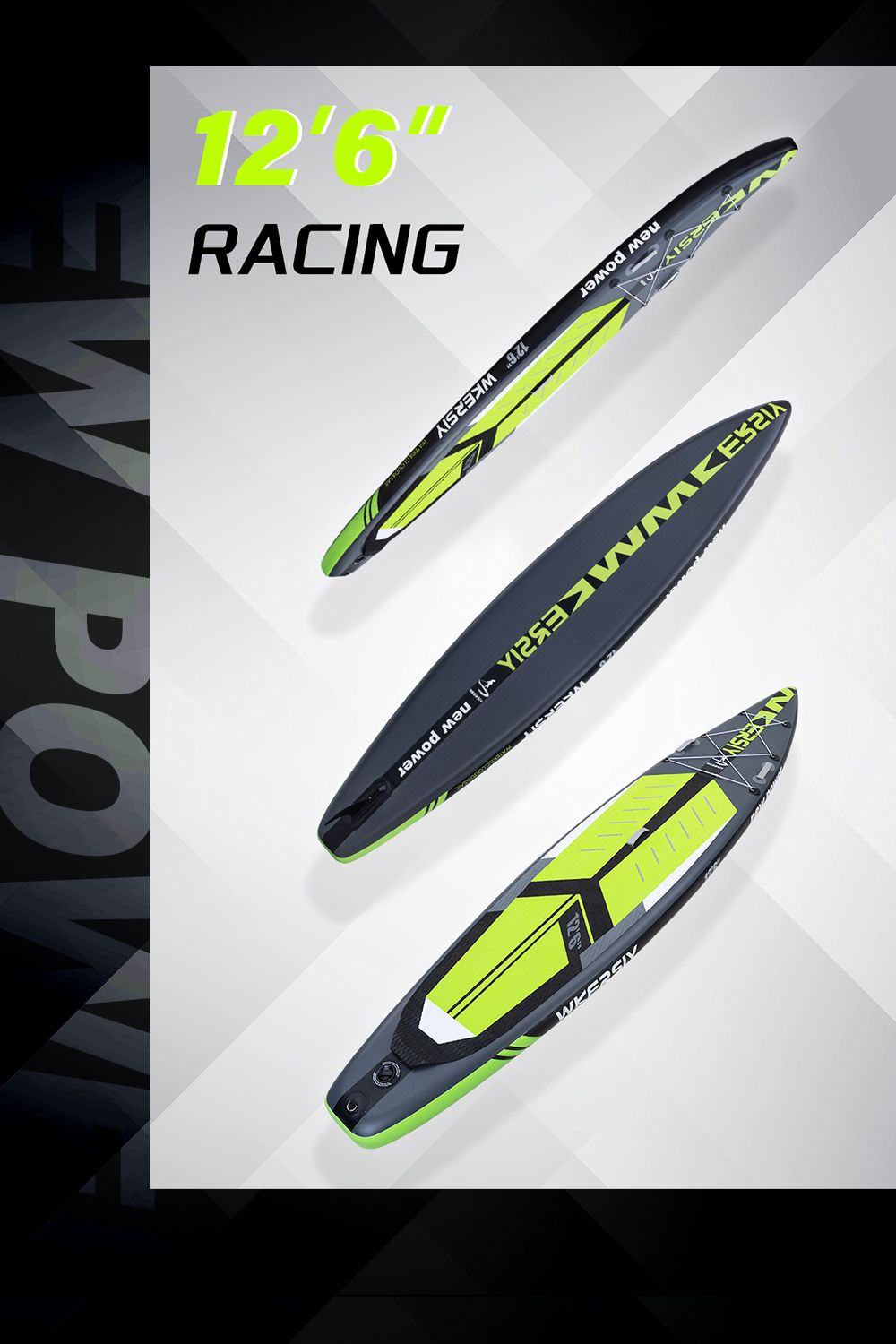
Our stability engineering—specifically our Metacentric Volume Clustering™—is designed to lower the neural load. By providing "passive feedback" through the rail geometry, the board handles the bulk of the micro-correction work. The board’s shape creates an inherent restorative force. When the board is stable, your nervous system can downregulate its stabilization signals. You are essentially "outsourcing" the balance task to the physics of the hull.
Section 3: The Energy Dividend
When you lower the neural load, you reclaim metabolic energy. That is energy that can be diverted back into your latissimus dorsi, your core rotation, and your forward propulsion. This is why athletes often report that they feel "faster" on a RockerWave board, even if they aren't paddling harder. They are simply operating at a higher level of neurological efficiency. They are not fighting for balance; they are focused on velocity.
Section 4: Racing with a Fresh Mind
In the final mile of a race, when the pressure is highest, a fresh nervous system is the ultimate competitive advantage. While your rivals are battling the "stutters" of their own boards and suffering from neural fatigue, you are calm, focused, and ready to execute your finish-line strategy. Stability is not just about staying upright; it is about keeping your mind fresh for the moments that matter most.
Race with less effort. Explore how our stability engineering keeps you fresh at RockerWave.com.