The Biomimetic Hull: Lessons from the Ocean’s Masters
Millions of years of evolution have turned dolphins, sharks, and whales into the most efficient transit machines on Earth. In the world of high-performance SUP design, we often get caught up in human-centric metrics—stiffness, weight, and aesthetics—while ignoring the solutions that nature has already perfected. At RockerWave, we began a deep-dive into biomimetic research, studying the flow-regime management of marine mammals. The result is a hull that doesn't just cut through the water; it interacts with it as if it were a natural extension of the ocean itself.
Section 1: The Principle of Dermal Compliant Surfaces
Marine mammals, particularly dolphins, utilize "dermal compliant surfaces"—their skin is not rigid; it absorbs and dissipates the energy of turbulent eddies. While we cannot make a carbon hull soft, we can replicate this principle through "Micro-Vortex Management." By introducing specific surface topographies in our hull finish, we effectively trap a thin layer of stationary water, creating a "lubricating" effect that reduces skin friction between the hull and the moving water mass.
Section 2: The Fusiform Advantage
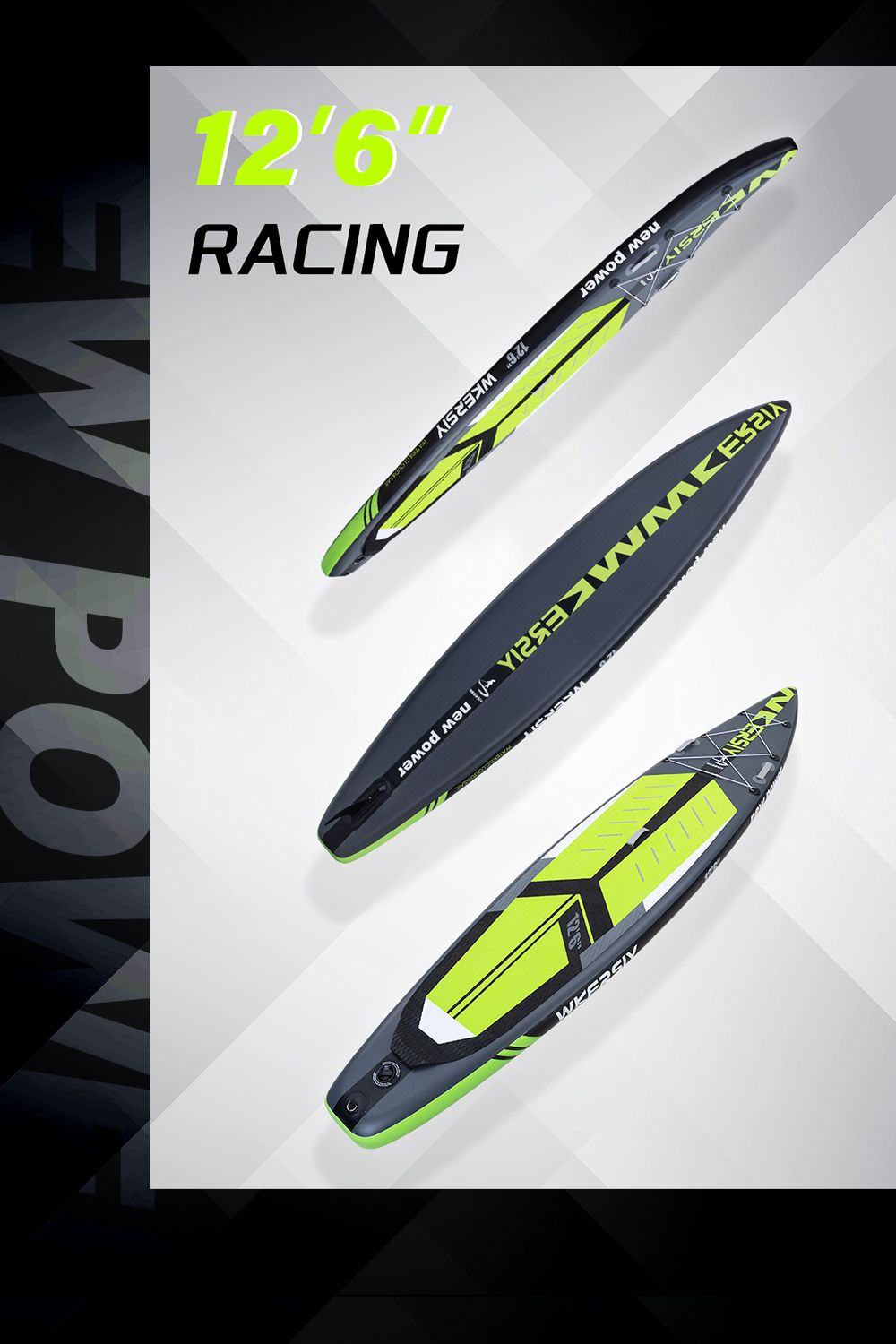
The fusiform shape—a spindle-like form with a thicker middle and tapered ends—is nature’s standard for efficiency. We have refined our Master Series rocker lines to follow the fusiform displacement curve. This reduces the energy cost of the "bow wave" and ensures that the water displaced at the nose is efficiently directed along the length of the board to the tail, where it provides a slight "push" effect as it leaves the hull.
Evolve your speed. See how biomimetic design is changing the game at RockerWave.com.