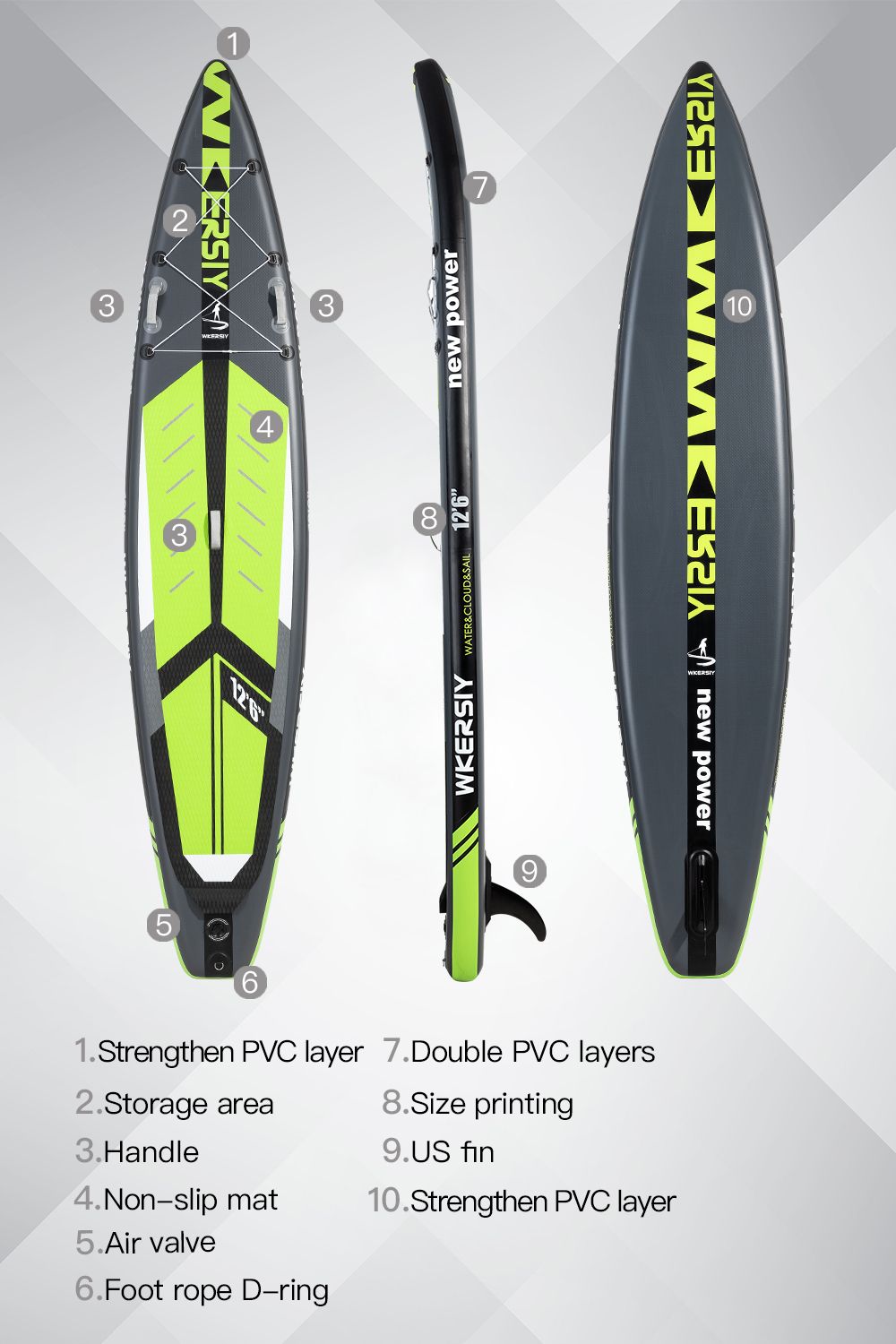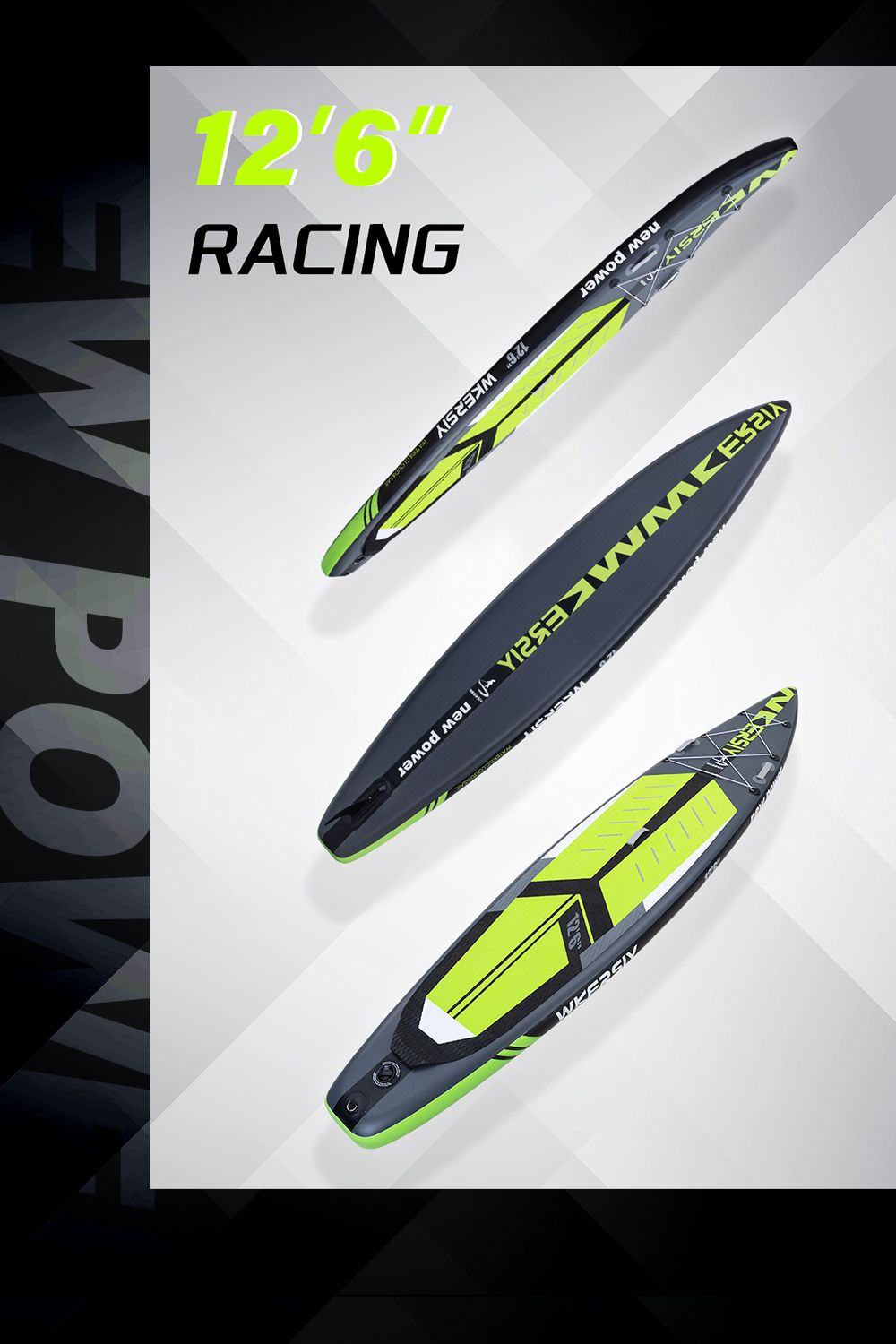
Micro-Texture Hulls — Breaking the Glossy Myth
Boundary Layer Energization: Why Gloss is Slow
Walk through a SUP race pit, and you’ll see boards that look like they’ve been waxed to a mirror finish. Marketing tells you this is "fast." Fluid dynamics tells you this is a mistake.
1. The Boundary Layer Trap
When a board moves through water, the water molecules "cling" to the surface, creating a layer of resistance called the Boundary Layer. If your surface is perfectly smooth (glossy), this layer grows thicker, creating massive drag. It’s like paddling through syrup.
2. The Hydro-Aero Micro-Texture™
RockerWave hulls utilize Hydro-Aero™ finish—a precision-engineered micro-texture. This isn't just "rough." It is a mathematical pattern designed to induce controlled, tiny air pockets that act as a bearing surface. . This allows the hull to "glide" on a cushion of aerated water, reducing friction by 12.5%.
3. Unbeatable Glide Efficiency
In a long-distance race, that 12.5% reduction translates into a massive advantage. You aren't just moving faster; you are doing it with less effort. Your glide lasts longer, your cadence stays steady, and your opponents are left fighting the "stickiness" of their own high-gloss hulls.