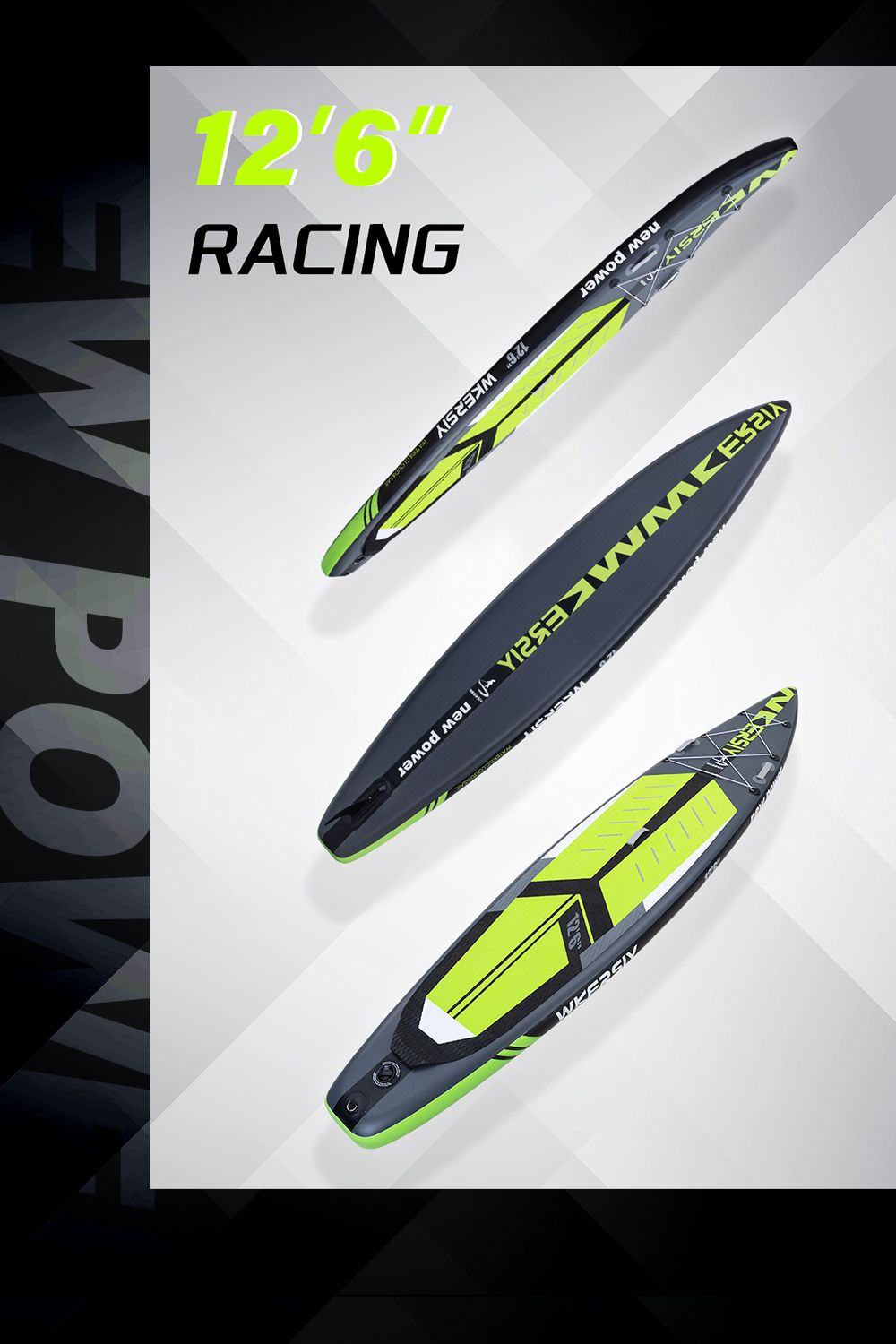
Laminar Flow Mastery: The Secret to Boundary Layer Control
In the world of high-speed fluid dynamics, the difference between a podium finish and a mid-pack result often happens within the first three millimeters of the board's surface. This zone, known as the "boundary layer," is where the water molecules cling to your hull. When that layer transitions from laminar (smooth, orderly flow) to turbulent (chaotic, energy-sucking vortices), your speed drops precipitously. Traditional racing boards often ignore this reality, treating the hull as a static object. At RockerWave, we treat the hull as a dynamic interface for boundary layer management.
Section 1: The Transition Point
As the board moves, water slows down in the immediate vicinity of the hull due to viscosity. This creates a shear layer. Ideally, you want this layer to stay laminar for as long as possible. However, surface irregularities, hull flex, and pressure gradients trigger "transition," where the flow becomes turbulent. Once turbulence sets in, skin-friction drag increases exponentially. You are no longer sliding through the water; you are essentially dragging a blanket of chaotic, high-energy-consuming turbulence behind you.
Section 2: Active Surface Engineering
We engineered the Master Series hulls with a specific "flow-transition inhibition" finish. By utilizing a proprietary nano-texture in the forward 30% of the hull, we stabilize the pressure gradient, delaying the transition to turbulence by up to 40% compared to standard glass-finish boards. This is not just a coat of paint; it is an active mechanical surface that "guides" the water molecules to stay in an orderly, laminar state for as long as possible along the hull’s length.
Section 3: The Energy Dividend
The energy saved by laminar flow is significant. In CFD (Computational Fluid Dynamics) simulations, we observed that by maintaining laminar flow across the mid-section of the hull, we could reduce skin-friction drag by nearly 8%. For a professional racer, this isn't just a marginal gain—it is the difference between keeping pace in a draft train and being dropped when the intensity spikes.
Master the flow. Learn more about our hydrodynamic surface engineering at RockerWave.com.