Cross-Wind Aerodynamics: Defeating the Invisible Enemy
There is a scenario every coastal SUP racer fears: you check the forecast on race morning, and you see 15-knot cross-winds. You know exactly what is about to happen. For the next two hours, you aren't going to be racing the other competitors; you are going to be fighting your own board. A heavy cross-wind turns the nose of your paddleboard into a sail. It violently pushes your trajectory off course, forcing you to paddle entirely on one side just to maintain a straight line. Your shoulders burn, your stroke rate plummets, and your race strategy disintegrates. But what if the problem isn't the wind? What if the problem is the aerodynamics of your hull?
Section 1: The "Sail Effect" and Yaw Instability
For years, SUP designers have focused entirely on hydrodynamics—how the board moves through the water. They largely ignored aerodynamics—how the exposed part of the board moves through the air. Many popular ocean racing boards feature massive, bulbous noses designed to punch through swell. While this works well for forward momentum in chop, it creates a catastrophic "Sail Effect" in a cross-wind.
When wind hits that high-volume bow, it acts on the "lateral center of effort." Because the nose is far away from the fin (the pivot point), the wind has massive leverage. It induces "Yaw"—an aggressive rotational force that spins the nose downwind. To counteract this, you have to drastically alter your stroke biomechanics, killing your speed and exhausting your unilateral muscle groups.
Section 2: RockerWave Low-Profile Aero-Bow Design
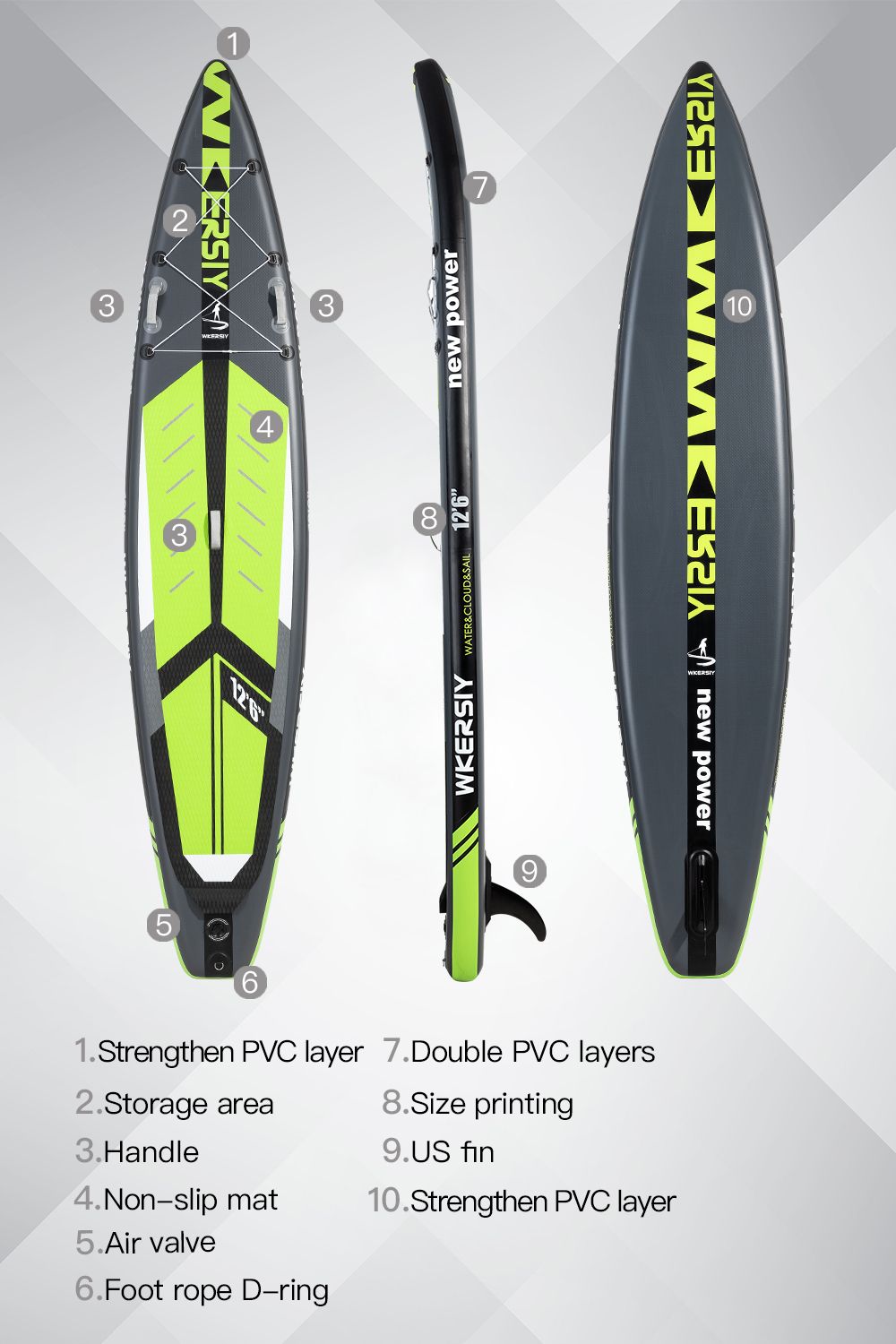
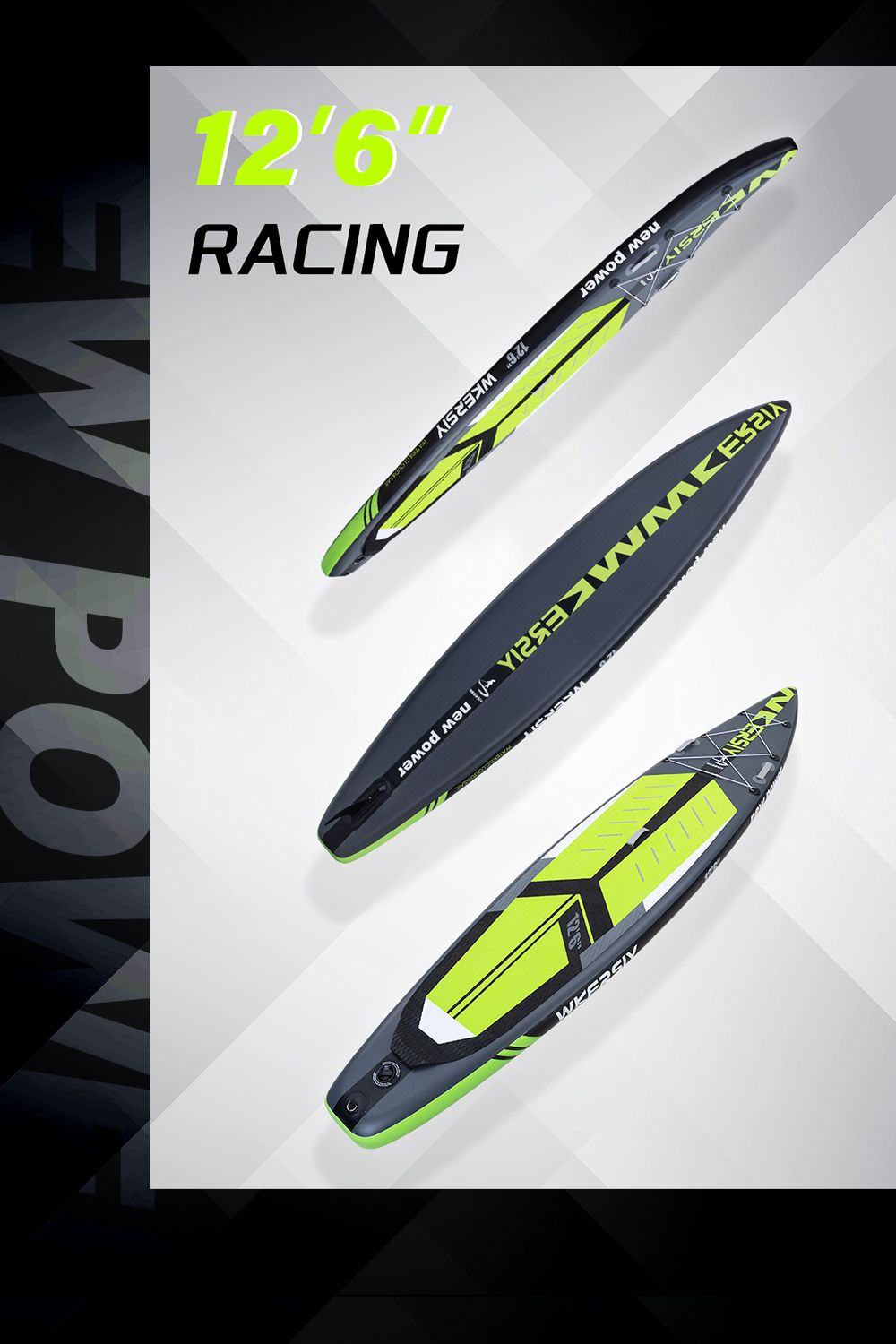
We decided it was time to design a hull for the real world, where the wind rarely blows exactly at your back. The RockerWave Master Series features a revolutionary Low-Profile Aero-Bow. We drastically reduced the vertical volume of the nose, redistributing that necessary buoyancy lower and wider into the submerged rails.
Above the waterline, the deck is swept and chamfered, much like the hood of a sports car. When a 15-knot cross-wind hits a RockerWave board, there is simply nothing for the wind to grab onto. The air flows smoothly over the chamfered deck, neutralizing the lateral pressure. The "Sail Effect" is virtually eliminated.
Section 3: Symmetrical Paddling in Asymmetrical Conditions
The tactical advantage of this aerodynamic intervention is profound. When your competitors are forced to paddle exclusively on their left side to fight a right-to-left wind, their stroke efficiency drops by 40%. Their core twists unnaturally, and their heart rate spikes.
Because the RockerWave hull ignores the cross-wind, you can maintain a symmetrical paddling rhythm. You can switch sides naturally, distributing the muscular load evenly across your back and shoulders. You stay in your aerobic zone, maintaining your cadence while your rivals exhaust themselves fighting the elements.
Section 4: Control the Controllables
You cannot control the weather on race day, but you can control how your equipment reacts to it. The Master Series isn't just designed for perfect, glassy mornings. It is engineered to perform when the environment turns hostile. Stop letting the wind dictate your race results.
Cut through the chaos. Discover the aerodynamic supremacy of RockerWave hulls and dominate coastal conditions at RockerWave.com.