Biomechanical Torque and the Kinetic Loop
Biomechanical Torque and the Kinetic Loop: Designing the Ultimate Cockpit
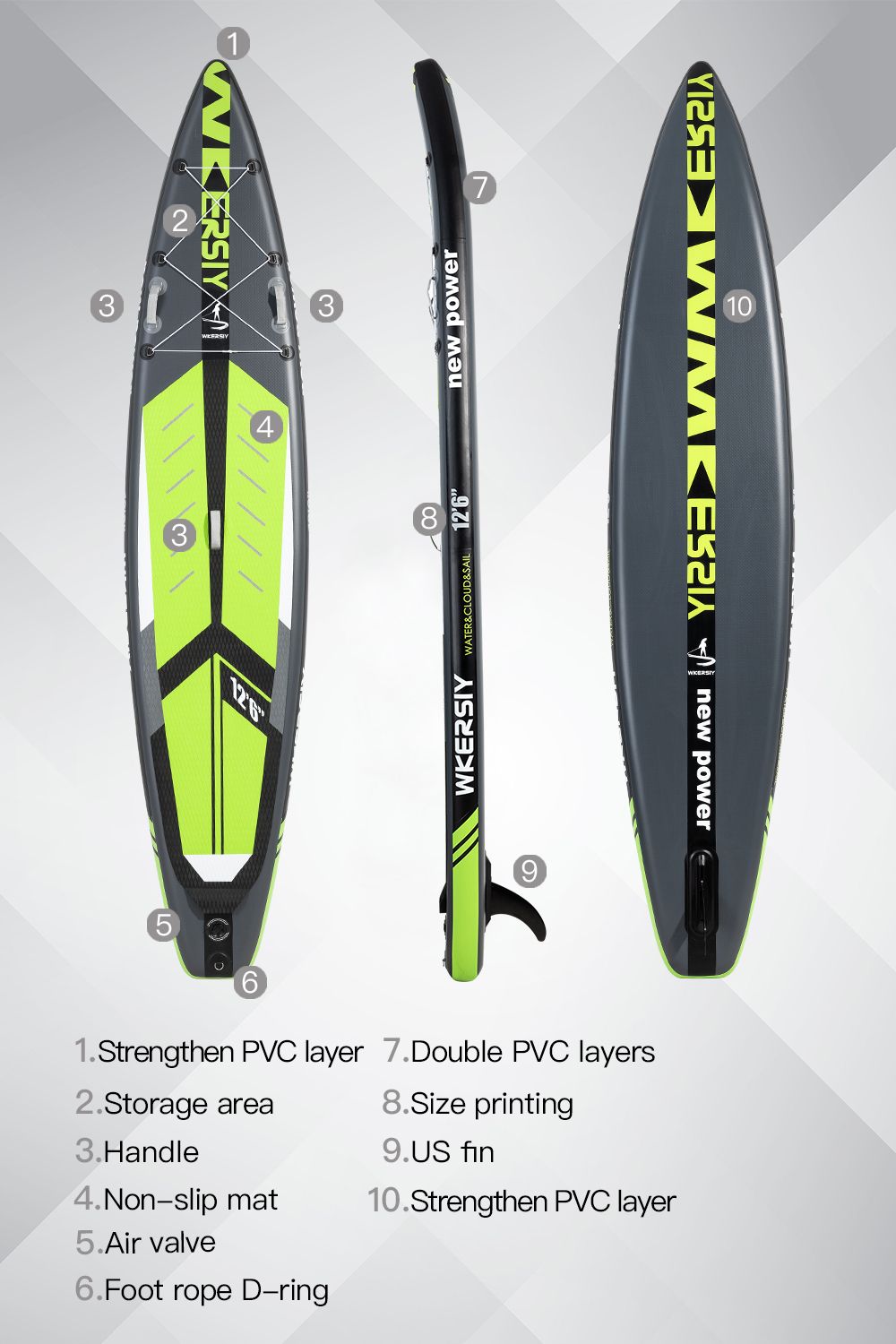
The standing cockpit of a racing SUP is the interface between human effort and marine propulsion. Yet, it is often designed with the least amount of engineering rigor. At RockerWave, we approach the deck through the lens of Biomechanical Torque, ensuring that every ounce of the athlete's effort is effectively coupled to the hull.
1. The Kinetic Chain
A racing paddle stroke is a closed kinetic chain: force initiates in the lats and core, travels through the hips, and is finally transmitted through the feet into the board. If the deck surface is flat and unrefined, the athlete’s ankles must perform constant, unconscious micro-adjustments just to maintain balance. This 'hidden work' consumes precious metabolic glycogen, leading to premature foot fatigue and diminished power output.
2. The Ergo-Lock™ Advantage
Our Ergo-Lock™ cockpit features subtle, molded foot-wedges positioned at a $1.5^\circ$ medial incline. This angle aligns the skeletal structure—ankles, knees, and hips—in the optimal position for force transmission. By locking the feet in a stable position, we eliminate the need for stabilizer muscle activation, allowing the athlete to channel their entire neurological output into the paddle’s pull-through phase.
3. The Competitive Edge
When the athlete is 'locked' into the kinetic loop, the board ceases to be a separate object; it becomes an extension of the skeletal frame. This total integration allows for greater stroke efficiency in brutal, open-ocean conditions, where balance is constantly challenged. When the competition is fighting to stay upright, our athletes are fighting to win the race. That is the RockerWave difference.