Beyond One-Size-Fits-All: Engineering the Three Stages of a High-Velocity Rail
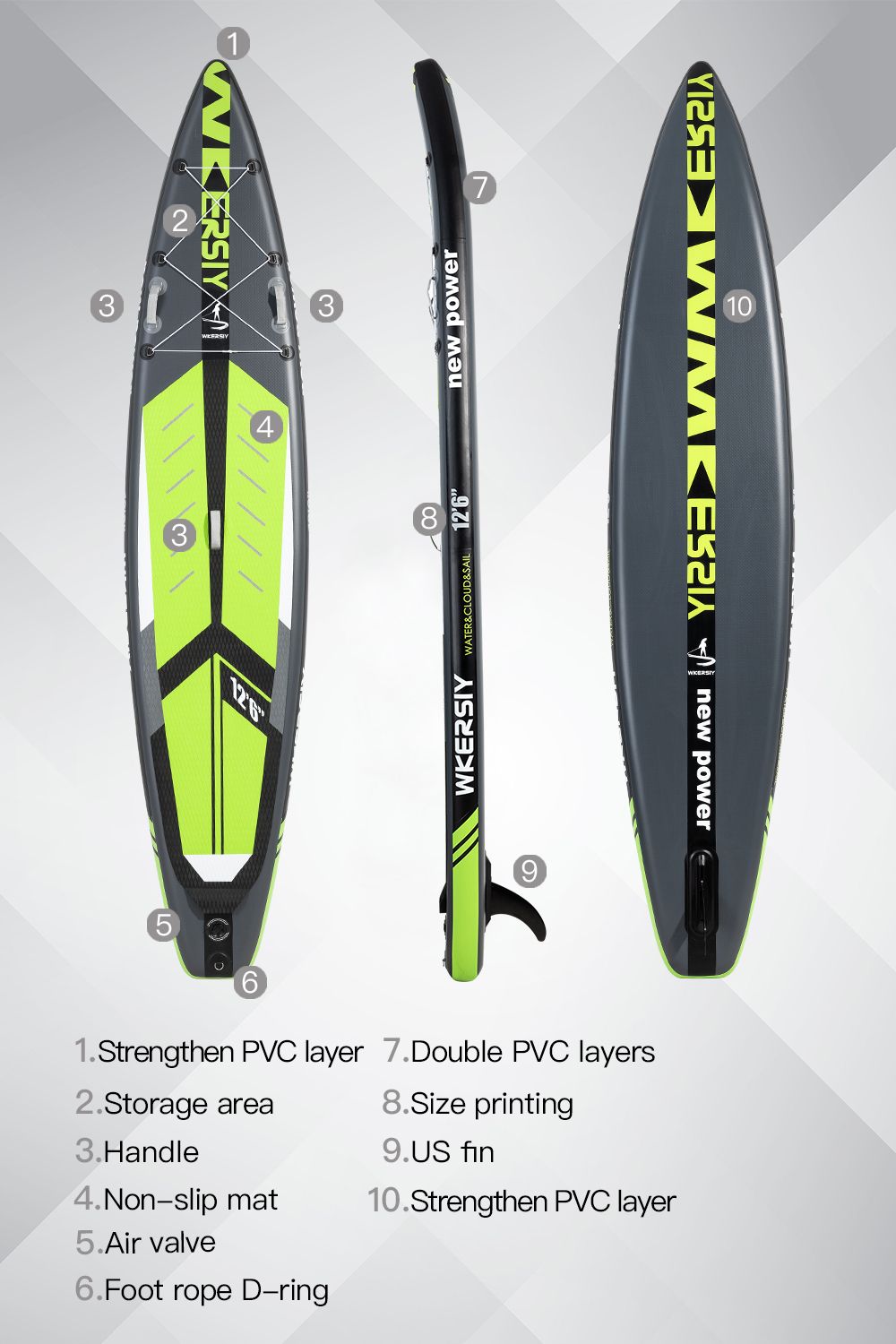
Generic paddleboards use a single rail profile from nose to tail. To a fluid dynamics engineer, this is a compromise that kills speed. Water behaves differently at the front of the board than it does at the back. RockerWave solves this with our Tri-Sectional Rail™ (TSR) architecture.
1. Stage One: The Displacement Bow (Nose)
At the entry point, the goal is Laminar Induction. The RockerWave rail is thin and parabolically rounded. This allows the board to "slice" the water without creating a "Bow Wave" (which is essentially wasted energy). By keeping the water flow "attached" to the hull, we eliminate the splash and turbulence that slows you down.
2. Stage Two: The Boxed-Apex Middle (Power Zone)
Where the rider stands, the rail transforms into a Boxed-Profile. This provides:
- Maximum Secondary Stability: The vertical side-wall pushes back against the water, allowing you to paddle a narrow board with total confidence.
- Vertical Lift: At high speeds, this section creates "Hydrodynamic Lift," lifting the hull higher in the water and reducing the "wetted surface area."
3. Stage Three: The 90-Degree Kinetic Release (Tail)
At the stern, the rail tapers into a razor-sharp 90-degree edge. Unlike rounded competitor rails that "suck" the water behind them (creating drag), our Kinetic Release forces the water to break clean. This creates an "Invisible Flow" where the water leaves the board instantly, maintaining your glide for 20% longer between strokes.